
If-then plans for the choices you keep postponing
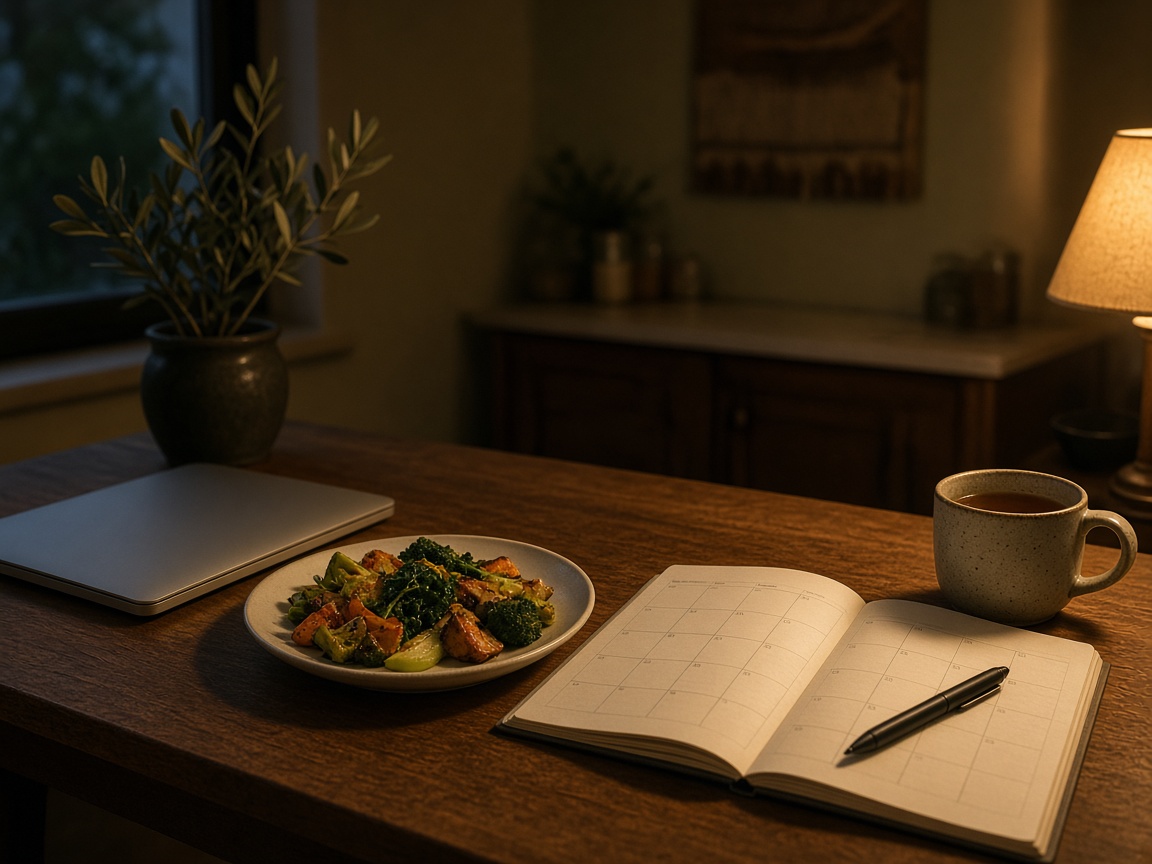
A choice becomes repeatable when it has a cue. Psychologist Peter Gollwitzer’s work on implementation intentions describes a simple form: if this situation happens, then I do this action. “If it is 12:30, then I eat lunch away from the desk.” “If I open the laptop after dinner, then I close it and fill the water bottle.” The plan is dull on purpose. Dull plans survive evenings when motivation does not. Pair that idea with the boundaries in a full calendar so the cue is protecting something you actually want.
Values sort the if-then list. If rest matters, the evening cue protects sleep. If steadier energy matters, the lunch cue protects a real meal. You do not need twelve plans. You need one plan you would still follow on a low-energy Wednesday, which is the same test used in the busy-day habits.
Defaults that spare you a debate
Decision fatigue is what happens when every meal, workout, and invitation is renegotiated from scratch. A default breakfast, two walking days, and a bedtime alarm remove three debates. Review the defaults every season. A summer walk may need a winter indoor version. Changing the plan is maintenance.
When two good options compete, ask which one leaves you more able tomorrow. Sleep, a basic meal, and a key relationship usually deserve the tie. Saying no is how you keep the tie-breaker from becoming a speech you resent giving.
Evidence you can see next week
Write the plan where you will see the cue: a note on the fridge, a calendar block, shoes by the door. After seven days, ask only whether the cue fired. If it did not, the cue was wrong, not your character. Move it to a moment that already happens.
A broken streak is information. Restart within a day if you can, at a smaller size. The skill worth practicing is the return. An unbroken chart is optional.
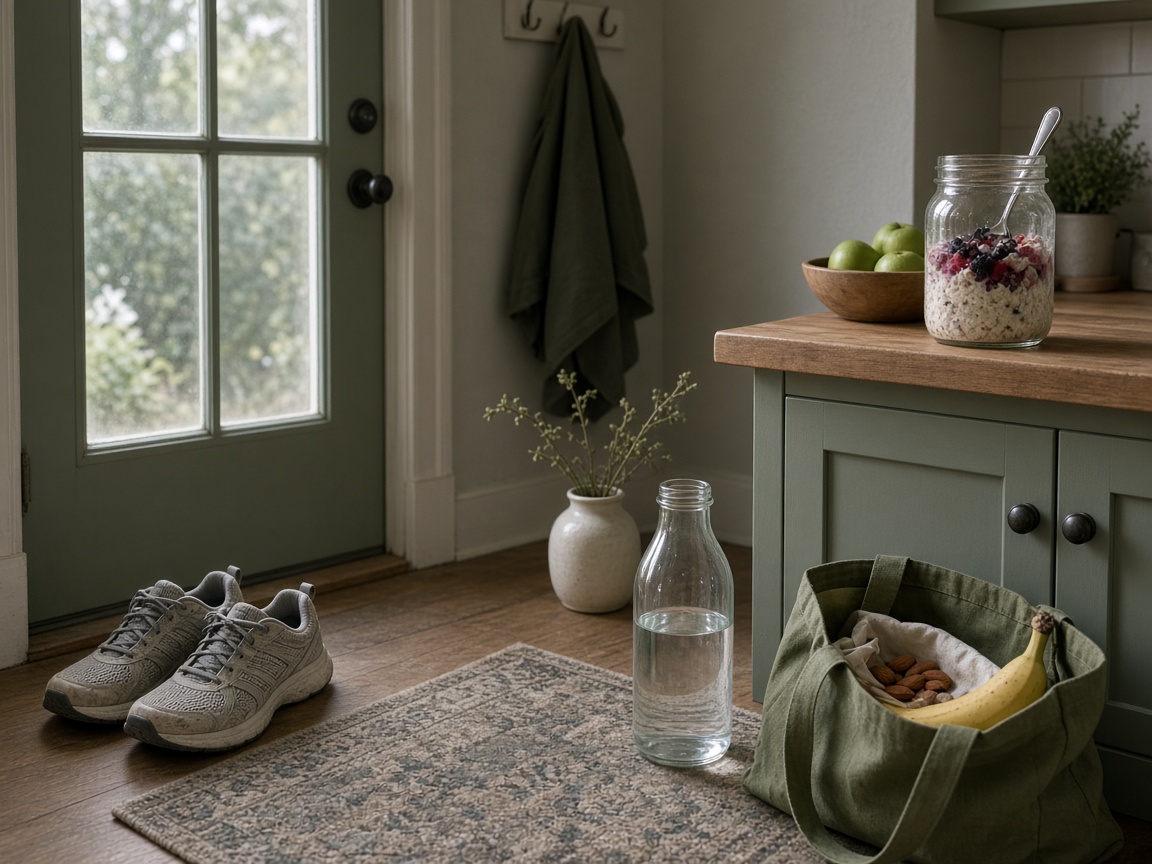
Leave breadcrumbs for the version of you who is tired: oats on the counter, sneakers by the door, a book on the pillow instead of the phone. Future-you is not more virtuous. Future-you is depleted, and the breadcrumb is an act of respect. Expect a tradeoff and name it. Choosing sleep may mean a shorter show. Choosing a walk may mean a later inbox. Unnamed tradeoffs turn into resentment. Share one choice with a person who cheers consistency rather than intensity. Accountability works better as encouragement than as surveillance. Seasonal edits are part of the plan. What worked in long daylight may need an indoor version when the evenings close in. The healthy choice is the one you can still recognize tomorrow, not the one that only looks impressive on the day you felt motivated. If the cue never fires, move it to a moment that already happens, such as locking the door or starting the kettle. A plan you have to remember at 9 p.m. is a plan you will drop. Write the if-then line where the cue lives, then leave it there for two weeks before you judge it.
Free printable
The 7-day sleep, movement and mood tracker
One page, three habits, a few seconds each evening. Built on the CDC sleep guidance and the U.S. activity guidelines, with a day-7 review to spot your own pattern.
You'll also get occasional wellness notes. Unsubscribe any time.
Continue learning
Further reading
Healthy Body Mind Life provides educational self-help content only. It is not medical, nutritional, therapeutic, or licensed counseling advice. For personal health concerns, consult an appropriately qualified professional.