What public guidance actually asks a plate to do
Public guidance is less dramatic than a challenge month. The World Health Organization describes a healthy diet as one that includes fruit, vegetables, legumes, nuts, and whole grains, and that limits salt, free sugars, and unhealthy fats. For anyone older than ten, the fruit-and-vegetable aim is at least 400 grams a day. Free sugars are limited to less than 10 percent of daily energy, and adult salt intake is limited to less than 5 grams a day. Those figures are population guidance, not a score you must hit before dinner counts.
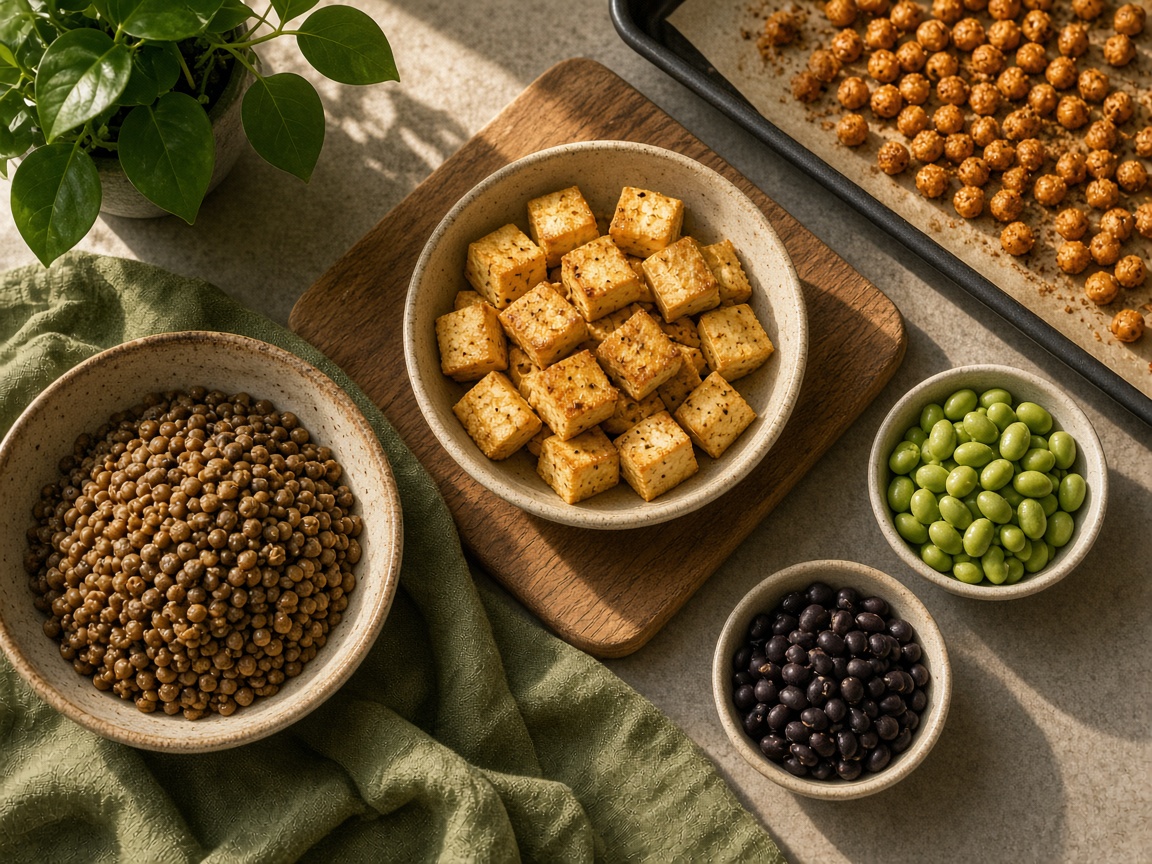
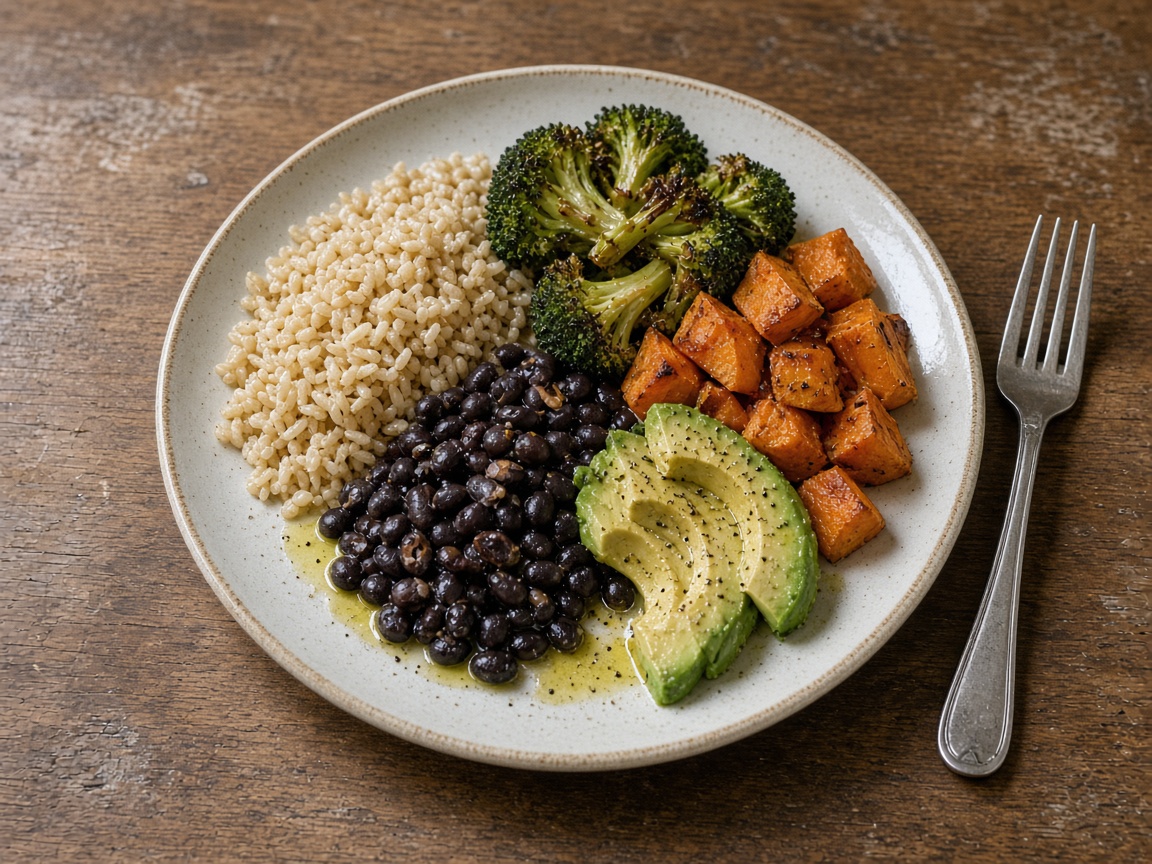
Canada’s Food Guide uses a simple picture: make half the plate vegetables and fruit, include whole grains, and include protein foods, with plant proteins more often. That picture is compatible with the meals you already cook. Rice and beans, a tofu stir-fry, or leftover vegetables folded into eggs can all point the same direction. The plant-protein list is a shopping companion, not a requirement to own every ingredient this week.
Defaults that survive a late commute
Write two breakfasts, two lunches, and three dinners you can cook when you are tired. Rotate sauces, not entire cuisines. Keep frozen vegetables, a grain, and a protein you trust within reach so the busy-day habits have food behind them. A default is successful when you use it on a Wednesday, not when it looks impressive on a Sunday.
If you want the week planned for you, the shop guide is a 28-day plant-forward structure with shopping lists. Use it as a container, then swap any meal that does not fit your kitchen, your budget, or the people you feed.
When a general plate is the wrong tool
Allergies, diabetes, kidney disease, pregnancy, and eating-disorder recovery change what a useful plate looks like. A fact sheet cannot see medications or lab results. Take the pattern to a registered dietitian or the clinician who knows your history, and let them edit it. Flexible eating still has room for foods you eat because you love them. A pattern that bans pleasure tends to break the week it gets difficult.
Rinse canned beans if you are watching sodium. Choose unsweetened drinks more often if sweet drinks are crowding out meals. Those are practical edits. They are not a personality.
Shop the meals you wrote down, not a fantasy of variety. A short list you repeat for three weeks teaches you what runs out, what gets ignored, and which sauce makes the plain meal worth eating. Frozen fruit at breakfast and a pot of grains for the week cover more ordinary nights than a new cookbook. Eat one meal without a screen when you can, even for ten minutes, and notice fullness. If family dinner is loud, claim a quieter meal alone once during the week as recovery. Delivery can stay an occasional tool. It becomes the plan only when the kitchen has no default. WHO also notes that total fat under 30 percent of energy, with a shift away from saturated and trans fat toward unsaturated fat, is part of the same pattern. Olive oil on vegetables is a practical version of that idea. It is not a requirement to calculate every gram before you eat.
For more plant-forward alkaline-style cooking, Alkaline Diet Recipes gathers recipes and kitchen guidance.
Free printable
The 7-day sleep, movement and mood tracker
One page, three habits, a few seconds each evening. Built on the CDC sleep guidance and the U.S. activity guidelines, with a day-7 review to spot your own pattern.
You'll also get occasional wellness notes. Unsubscribe any time.
Continue learning
Further reading
Healthy Body Mind Life provides educational self-help content only. It is not medical, nutritional, therapeutic, or licensed counseling advice. For personal health concerns, consult an appropriately qualified professional.