A family of practices, not one technique
Meditation, as the National Center for Complementary and Integrative Health describes it, is a variety of practices that focus on mind and body integration and are used to calm the mind and support well-being. Some keep attention on a sensation such as breathing, a sound, an image, or a repeated word. Mindfulness, in that fact sheet, means maintaining attention on the present moment without making judgments.
Programs often mix the practice with other pieces. Mindfulness-based stress reduction teaches mindful meditation and also uses discussion and other strategies for stressful experiences. Mindfulness-based cognitive therapy weaves mindfulness together with aspects of cognitive behavioral therapy. If a headline says “meditation,” it may be describing one of these packages, or a few minutes of breathing, or something else entirely. The studies are hard to compare for that reason.
Popular, and not automatically safe for everyone
According to the National Health Interview Survey, as summarized by NCCIH, the share of U.S. adults who practiced meditation rose from 7.5 percent in 2002 to 17.3 percent in 2022. In 2022 it was the most used of seven complementary approaches the survey asked about, ahead of yoga at 15.8 percent. Popularity is not evidence of effect, and it is not evidence of harmlessness.
NCCIH says these practices are usually considered to have few risks, and also that few studies have looked hard at harmful effects, so definite safety statements are not possible. A 2020 review of 83 studies, 6,703 participants in all, found that 55 of the studies reported negative experiences. The researchers concluded that about 8 percent of participants had a negative effect, similar to the percentage reported for psychological therapies. The most commonly reported negative effects were anxiety and depression. In a smaller look at three studies of mindfulness-based stress reduction, 521 participants, the practices were not more harmful than no treatment. If a session leaves you more flooded, stop. That is allowed.
What the stronger summaries actually found
NCCIH is blunt that much of the research has been preliminary or not rigorous, that different practices were lumped together, and that results may have been read too optimistically. Within that caution, a few analyses are worth knowing in their own words’ shape, not as slogans.
A 2018 analysis supported by NCCIH looked at 142 groups, more than 12,000 participants with diagnosed psychiatric disorders such as anxiety or depression. Mindfulness-based approaches were better than no treatment for anxiety and depression, and they worked as well as established treatments such as cognitive behavioral therapy and antidepressant medication in that analysis. A 2021 analysis of 23 studies, 1,815 adults with diagnosed anxiety disorders, found mixed short-term results. Overall the mindfulness approaches reduced anxiety and depression symptoms more than usual care, and only some types matched cognitive behavioral therapy. NCCIH says those results should be read cautiously because the risk of bias was unclear, and the few studies that followed people longer than two months found no long-term effect.
Sleep, without overselling it
A 2019 analysis of 18 studies, 1,654 participants, found that mindfulness meditation improved sleep quality more than education-based treatments. The effects were no different from evidence-based treatments such as cognitive behavioral therapy and exercise. If sleep is the problem, meditation is not described as better than the treatments that already have a track record. The hours article and the room checklist are the practical companions. A dark room and a consistent wake time are still doing work a cushion cannot do.
NCCIH also reviews pain, blood pressure, substance use, and other topics, and the results there are mixed or limited. This article will not turn those sections into a list of cures. Read the fact sheet if a specific condition is why you are looking.
A short practice that stays a practice
If you want to try the thing the research is actually about, keep it small. Sit somewhere you will not be interrupted. For five minutes, notice the breath, and when attention leaves, bring it back without a speech. That is closer to the definition of mindfulness than a playlist of promises. The ten-minute journal is a different tool. Use one of them on a given day, not both as a new identity.
NIMH’s stress fact sheet lists relaxation and mindfulness apps among coping options, next to sleep, meals, movement, and people. An app is optional. The daytime self-care notes already include a pause with a job. Meditation can be that pause. It does not have to be a brand.
Do not use it as a reason to delay care
NCCIH’s tips are direct. Do not use meditation or mindfulness to replace conventional care, or as a reason to postpone seeing a clinician about a medical problem. Ask about an instructor’s training. Tell your own clinicians what you are doing so decisions stay shared. If symptoms of anxiety or low mood are severe or have lasted, the NIMH caring page is the place that says when to ask for a referral.
If you are in crisis, call or text 988 or use 988lifeline.org. A breathing practice is not a crisis line.
What to tell a friend who asks if it works
A fair sentence is: for some people with anxiety or depression, mindfulness-based programs have done better than doing nothing, and in one large analysis they looked similar to established therapies, while a lot of the wider research is still thin, and a minority of people feel worse. That is less exciting than a headline. It is closer to the fact sheet.
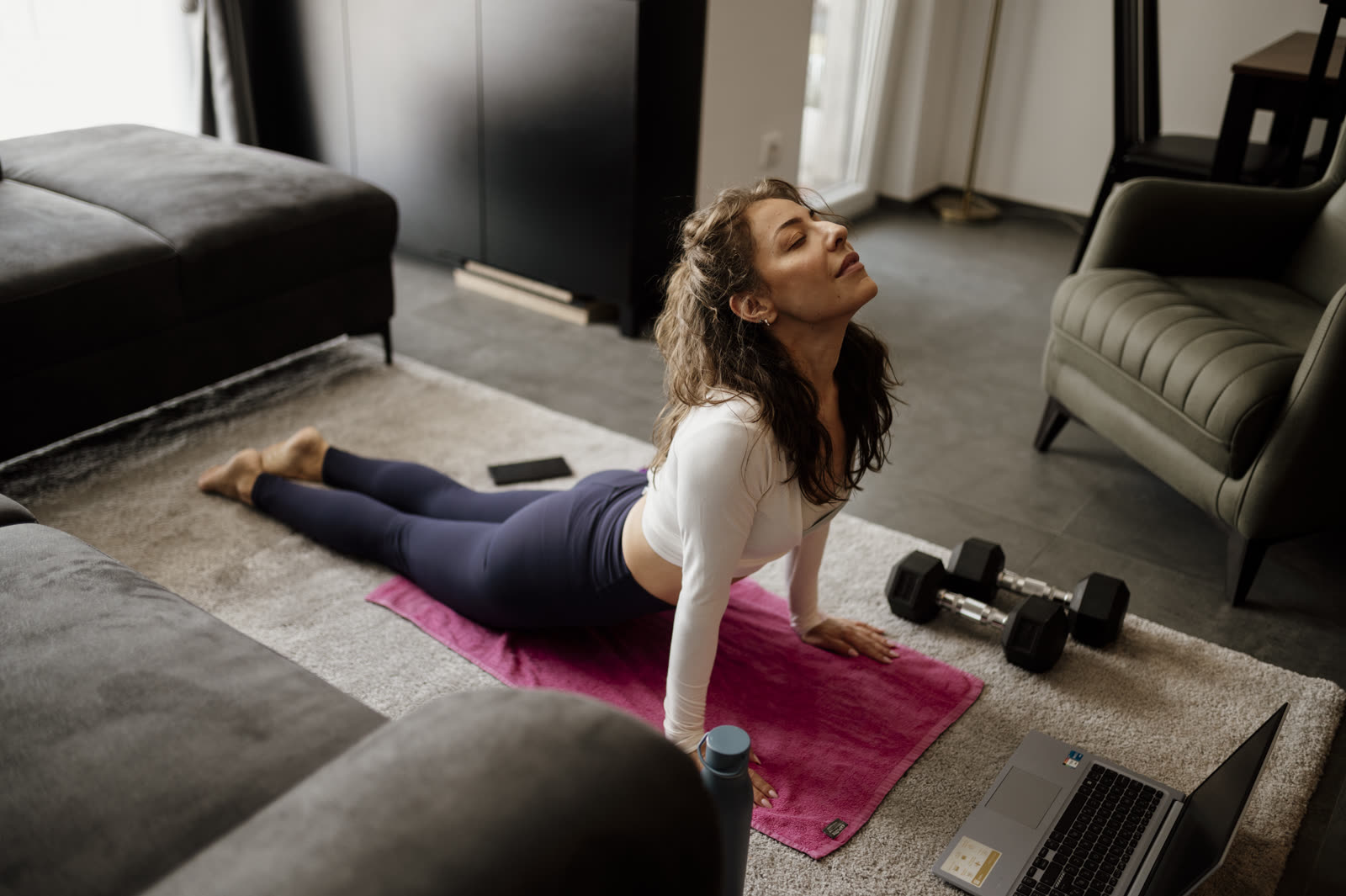
Photo: yoga at home, Shixart1985, CC BY 2.0, via Wikimedia Commons.
Free printable
The 7-day sleep, movement and mood tracker
One page, three habits, a few seconds each evening. Built on the CDC sleep guidance and the U.S. activity guidelines, with a day-7 review to spot your own pattern.
You'll also get occasional wellness notes. Unsubscribe any time.
Continue learning
Further reading
Healthy Body Mind Life provides educational self-help content only. It is not medical, nutritional, therapeutic, or licensed counseling advice. For personal health concerns, consult an appropriately qualified professional.